
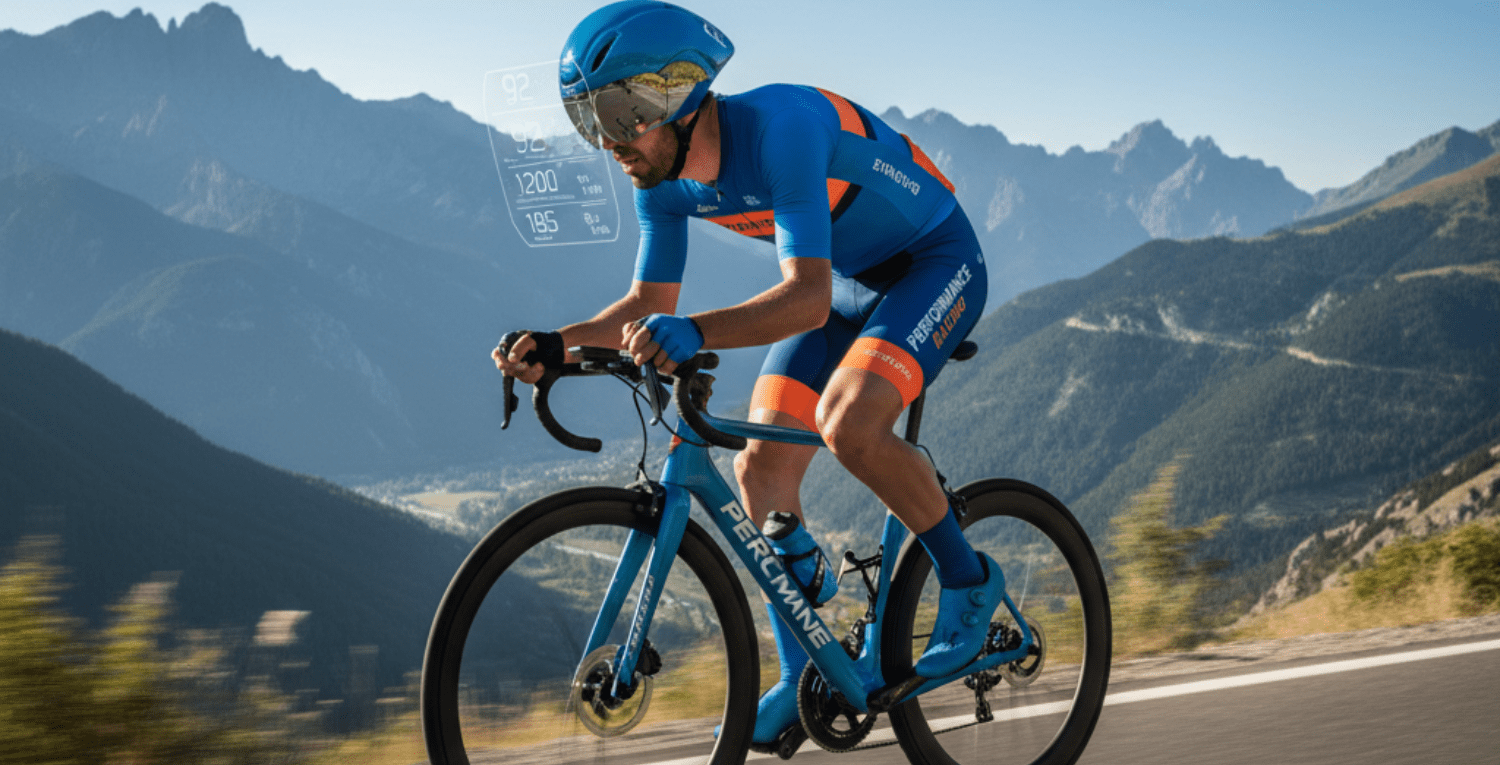
**Quick Answer:** Functional Threshold Power (FTP) is the maximum average power in watts a cyclist can sustain for approximately one hour. It serves as the foundation for personalized training zones, workout intensity, and performance tracking. FTP is tested through protocols like the 20-minute test (multiply average watts by 0.95) and should be retested every 4-6 weeks during active training. Training zones from Zone 1 (recovery, <55% FTP) to Zone 7 (sprints, >150% FTP) are calculated as percentages of your FTP.
Functional Threshold Power represents far more than just a number—it’s a comprehensive indicator of your aerobic fitness and sustainable power output capacity. Training with FTP offers several critical advantages that transform how cyclists approach their development. First, FTP establishes accurate training zones that ensure workouts target specific physiological adaptations rather than relying on subjective perceived effort. Second, regular FTP testing provides measurable progress tracking, allowing cyclists to see concrete improvements in their fitness levels across training blocks and seasons. Wahoo KICKR CORE smart trainer with ERG mode automatically adjusts resistance to maintain your exact FTP-based target watts during structured workouts, ensuring precise execution of zone-specific intervals while providing the consistent power data needed for accurate progress tracking across training blocks.
Additionally, knowing your FTP enables proper pacing strategies during events, preventing early fatigue from starting too hard or leaving unused energy by riding too conservatively. Power-based training using FTP also accounts for variables that heart rate training cannot address, such as cardiac drift, daily fatigue levels, and environmental conditions. This makes FTP an essential metric for cyclists seeking to maximize their training efficiency and competitive performance.
Several validated (protocols for testing your FTP) exist, each with specific advantages depending on your fitness level and testing preferences.The most common method is the 20-minute FTP test, which involves a proper warm-up followed by a maximal 20-minute sustained effort. Your FTP is calculated as 95% of your average power output during this test, accounting for the slight power decrease that occurs in a full 60-minute effort.
Alternative testing protocols include the traditional 60-minute test, which provides the most accurate FTP measurement but requires significant mental and physical commitment. The ramp test, popularized by indoor training platforms, gradually increases power until exhaustion and uses algorithms to estimate FTP from maximum effort. Shorter protocols like the 8-minute test (using two 8-minute efforts) offer options for time-constrained athletes, though these may be less accurate for certain rider types. Wahoo ELEMNT BOLT GPS bike computer with structured workout capability guides you through FTP test protocols with on-screen prompts for warm-up intervals, test execution, and cooldown phases while automatically calculating your FTP from average power data, eliminating manual math and ensuring consistent testing conditions across seasons.
Regardless of the testing protocol chosen, consistency matters most for tracking progress. Testing should occur in similar conditions—same time of day, proper rest, adequate nutrition—and should be repeated every 4-6 weeks during active training periods. Many cyclists test at the beginning of training blocks to establish current fitness levels and set appropriate training zones for the upcoming mesocycle.
Once you’ve established your FTP, you can calculate personalized training zones that target specific physiological adaptations. The most widely used system divides training intensity into seven zones, each corresponding to different percentages of your FTP and producing distinct training effects.
Zone 1, Active Recovery (less than 55% FTP), facilitates recovery through very easy spinning that promotes blood flow without inducing fatigue. Zone 2, Endurance (56-75% FTP), builds aerobic base fitness and fat oxidation capacity through comfortable, conversational-pace riding. Zone 3, Tempo (76-90% FTP), represents moderately hard efforts that improve muscular endurance and sustainable power at sub-threshold intensities.
Zone 4, Lactate Threshold (91-105% FTP), includes efforts at or slightly above FTP that directly improve your functional threshold power through physiological adaptations to sustained high-intensity work. Competitive Cyclist’s Castelli Perfetto RoS 2 jacket provides thermal regulation and weather protection that enables consistent Zone 4 threshold sessions year-round, preventing workout cancellations due to cold or variable conditions that would otherwise disrupt the training consistency essential for raising FTP. Zone 5, VO2 Max (106-120% FTP), consists of short, intense intervals that increase maximum oxygen uptake and anaerobic capacity. Zone 6, Anaerobic Capacity (121-150% FTP), develops the ability to produce very high power outputs for short durations, while Zone 7, Neuromuscular Power (greater than 150% FTP), encompasses maximal sprint efforts that train explosive power and neuromuscular coordination.
Increasing FTP requires strategic training that balances intensity, volume, and recovery. The most effective approach combines sweet spot training (88-94% FTP) with targeted threshold intervals, building both the physiological systems and muscular endurance required for sustained high power output. Sweet spot workouts provide significant fitness gains with manageable fatigue accumulation, making them ideal for consistent week-to-week training.
Structured interval training at or near threshold (Zone 4) directly challenges your FTP, forcing adaptations that raise the ceiling of sustainable power. Common threshold protocols include 2×20-minute intervals, 3×12-minute intervals, or longer continuous efforts at 95-100% FTP. These sessions should be complemented by adequate endurance riding in Zone 2 to build aerobic foundation, VO2 max intervals to increase your cardiovascular ceiling, and sufficient recovery to enable adaptation. Maurten Gel 100 CAF 100 provides 25 grams of carbohydrates plus 100mg caffeine in hydrogel form that sustains energy output during demanding 2×20 or 3×12 threshold intervals while enhancing mental focus and reducing perceived exertion during the hardest minutes of FTP-building sessions.
Progressive overload—gradually increasing training stress through higher intensity, longer duration, or greater frequency—drives continued FTP improvements. However, recovery remains equally important, as physiological adaptations occur during rest periods between hard efforts. Most successful training plans incorporate periodization, cycling between building blocks of progressive stress and recovery weeks with reduced volume to consolidate fitness gains.
Accurate FTP testing and training require a reliable power meter, which measures the actual wattage you produce while cycling Several power meter types exist, including crank-based systems, pedal-based units, hub-based models, and spider-based meters. Each offers different advantages regarding accuracy, ease of installation, portability between bikes, and price point.
When selecting a power meter for FTP training, consistency matters more than absolute accuracy. While most quality power meters measure within 1-2% accuracy, the key is using the same device for all tests and training sessions to ensure valid comparisons over time. Indoor smart trainers also provide power measurement, though readings may differ slightly from outdoor power meters due to drivetrain losses and measurement location differences.
Regular power meter calibration ensures measurement accuracy, with most devices requiring zero-offset calibration before rides. Understanding your power meter’s specifications, including whether it measures single-leg or dual-leg power, helps interpret data correctly and set appropriate training targets based on your FTP.
While FTP serves as a fundamental training metric, understanding how it relates to other performance indicators provides comprehensive fitness assessment. FTP differs from Critical Power (CP), which represents a similar concept but uses a different mathematical model based on the power-duration relationship. Critical Power is determined through multiple maximal efforts of varying lengths rather than a single sustained test.
Watts per kilogram (W/kg) normalizes FTP for body weight, providing better comparison between riders of different sizes and indicating climbing performance potential. While a heavier rider might have a higher absolute FTP, a lighter rider with superior W/kg will typically perform better on climbs due to favorable power-to-weight ratio. Elite male cyclists often achieve 5.5-6.5 W/kg or higher, while elite women typically range from 4.5-5.5 W/kg.
FTP also differs from VO2 max, which measures maximum oxygen uptake rather than sustainable power output. While these metrics correlate, a rider can have high VO2 max but lower FTP due to factors like lactate clearance efficiency, muscular endurance, or cycling economy. Understanding these distinctions helps cyclists identify specific areas for performance improvement beyond simply raising FTP.
Many cyclists make predictable errors that compromise FTP test accuracy or training effectiveness. The most common mistake involves inadequate warm-up before testing, which prevents full physiological activation and yields artificially low FTP values. A proper warm-up should include 10-15 minutes of progressive intensity, reaching near-threshold efforts before the actual test begins.
Pacing errors during FTP tests—starting too hard and fading, or riding too conservatively—produce inaccurate results. The ideal 20-minute FTP test should feel challenging but sustainable throughout, with slight intensity increase only in the final minutes. Many cyclists also test too frequently, creating fatigue without allowing time for actual fitness improvements, or test too rarely, training with outdated zones that no longer match current fitness levels.
Training mistakes include spending too much time at threshold intensity, which can lead to overtraining and burnout, or conversely, avoiding threshold work entirely in favor of only easy or very hard efforts. Effective FTP improvement requires balanced training across zones, with threshold work representing just one component of a complete program alongside endurance, recovery, and high-intensity training.
Functional Threshold Power serves different roles depending on cycling discipline and event duration. Road racing cyclists use FTP to pace sustained efforts during breakaways, time trials, and long climbs, where maintaining optimal power output for extended periods determines success. Time trialists particularly rely on FTP, as events often occur at or slightly below threshold power for their entire duration.
Mountain bikers benefit from understanding FTP for pacing climbs and sustained trail sections, though the variable nature of off-road riding means actual power output fluctuates significantly around threshold. Criterium racers need high FTP to handle repeated accelerations and sustained high-pace riding, but also require power above FTP for attacks and sprint positioning. Gran fondo and sportive riders use FTP primarily for pacing strategy, ensuring they don’t exceed sustainable power levels early in long events.
Indoor cycling and virtual racing platforms like Zwift heavily emphasize FTP for categorizing riders, setting workout intensities, and creating balanced competition. Track cyclists, particularly in pursuit events, operate at or above FTP for their entire race duration, making threshold power development central to their training focus. Understanding how FTP applies to your specific cycling goals allows for more targeted training approaches.
FunctionalThresholdPower.com serves as the comprehensive educational resource for cyclists seeking to understand, test, and improve their functional threshold power. Founded by cycling industry professionals with extensive experience in power-based training, our platform provides evidence-based information, practical testing protocols, structured training guidance, and equipment recommendations for cyclists at all levels.
Our mission centers on making power-based training accessible and understandable for every cyclist, from beginners discovering FTP for the first time to experienced athletes refining their training approaches. We translate complex exercise physiology and training science into practical, actionable guidance that riders can immediately apply to their training programs. Whether you’re preparing for your first FTP test, troubleshooting training plateaus, or seeking advanced periodization strategies, FunctionalThresholdPower.com provides the knowledge and resources to support your cycling performance goals.
The site features regularly updated content including detailed testing protocols, training plan templates, power meter comparisons, zone calculation tools, and answers to frequently asked questions about functional threshold power. We collaborate with coaches, exercise physiologists, and experienced cyclists to ensure our information reflects current best practices and the latest research in cycling performance optimization.
Understanding and training with Functional Threshold Power represents one of the most significant steps toward improved cycling performance. Whether you’re new to power-based training or looking to refine your approach, FunctionalThresholdPower.com provides the comprehensive resources you need to succeed. Explore our testing guides to determine your current FTP, review our training zone explanations to structure your workouts effectively, and discover how consistent power-based training transforms your riding capabilities.
Begin by establishing your baseline FTP through proper testing, then use that number to set personalized training zones that match your current fitness level and target specific physiological adaptations. Track your progress through regular retesting, adjust training intensities as your fitness improves, and apply power-based pacing strategies during rides and events. The journey to higher FTP and better cycling performance starts with understanding this fundamental metric and committing to structured, progressive training that challenges your current threshold while allowing adequate recovery for adaptation.
What is a good FTP for my age and weight?
FTP standards vary by experience and goals. Recreational cyclists average 2.0-2.5 watts/kg, fitness enthusiasts 2.5-3.5 W/kg, competitive amateurs 3.5-4.5 W/kg, and professionals exceed 5.0 W/kg. Age impacts peak power—expect 5-10% decline per decade after age 40. Focus on personal improvement rather than comparisons, as body composition, training history, and genetic factors create wide individual variation.
How long does it take to improve FTP?
Beginners gain 10-20 watts monthly during initial 3-6 months of structured training. Intermediate cyclists improve 5-10 watts monthly with focused threshold work. Advanced athletes see 2-5 watt monthly gains requiring sophisticated periodization. Improvements plateau without progressive overload, adequate recovery, and proper nutrition. Most cyclists reach genetic potential within 3-5 years of consistent training.
Does FTP decline with age?
FTP naturally declines approximately 5-10% per decade after age 40 due to reduced maximum heart rate, decreased muscle mass, and slower recovery. However, consistent training dramatically slows decline—active 60-year-olds often maintain higher FTP than sedentary 30-year-olds. Masters athletes competing regularly show minimal decline through their 50s with proper training and recovery management.
Can I have different FTP values for different positions?
Yes, FTP varies between positions. Time trial position typically produces 5-15 watts lower FTP than road position due to restricted breathing and compressed hip angle limiting power output. Mountain bike FTP generally matches road position but varies based on bike fit. Indoor trainer FTP often runs 5-10% lower than outdoor due to heat accumulation and absence of freewheeling recovery. Test and train in the position you’ll use for your target event to ensure zone accuracy. Many serious cyclists maintain separate FTP values for road, TT, and indoor training to ensure precise zone targeting across different riding contexts.
Not sure where to focus your training?
Answer 7 quick questions and get a personalized FTP roadmap built around your fitness level, available training time, and biggest limiter — in about two minutes.
Take the Free FTP Quiz →
James Hickman is a former USA Cycling Expert-level coach who has worked with cyclists at every level, from beginners to competitive racers. He served as a coach for the Leukemia & Lymphoma Society’s Team In Training program, helping riders prepare for and complete century events. A Masters-category racer himself, he competed and earned podium finishes in Southern California events and holds a Platinum finish at El Tour de Tucson, completing the century in under five hours.
Essential for accurate FTP measurement and power-based training. Track your watts in real-time to execute precise interval workouts and monitor your progress across all training zones.
Accurate heart rate tracking ensures you’re training in the correct zones, especially during long Zone 2 endurance rides where maintaining consistent aerobic intensity builds your FTP foundation.
Real-time power zone feedback helps you nail sweet spot and threshold intervals with precision, eliminating guesswork and maximizing training effectiveness during every workout.
Monitor oxygen saturation and resting heart rate to assess recovery between hard training sessions. Proper recovery ensures you’re ready for your next FTP-building workout.
Track interval duration, lap power, and rest periods with precision. Perfect for executing structured threshold and VO2max sessions while monitoring key performance metrics in real-time.
Control your power output precisely during structured intervals regardless of weather. ERG mode automatically adjusts resistance to maintain target watts during sweet spot and threshold workouts.
Saris M2 best bang for your buck! →
We are an Amazon affiliate and earn from qualified Amazon purchases with no cost to you. This is for ANY product that you purchase through our links.