
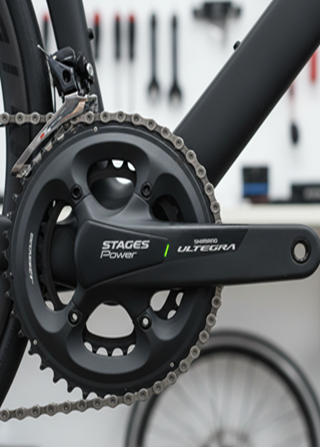

Power meters revolutionized cycling training by providing objective, real-time measurement of work output in watts, eliminating the guesswork inherent in heart rate monitoring and perceived exertion. Understanding power meter technology, accuracy specifications, and installation options enables informed purchasing decisions that optimize your FTP testing, interval training, and race preparation strategies. The Favero Assioma Duo pedal-based power meter delivers laboratory-grade accuracy (±1%) with simple installation, automatic firmware updates, and dual-sided measurement at a price point that makes precise power training accessible to serious cyclists.
Power meters measure force applied to your bicycle’s drivetrain using strain gauges—microscopic sensors that detect mechanical deformation when you apply torque through the pedal stroke. These sensors capture force data hundreds of times per second, multiply by cadence (pedaling speed), and calculate instantaneous power output in watts using the formula: Power = Torque × Angular Velocity.
Critical Components:
Accuracy Standards: Premium power meters achieve ±1% accuracy through sophisticated calibration and temperature compensation algorithms. This precision level proves essential for structured training where 5-10 watt differences significantly impact training zones and threshold intervals.
Pedal power meters install like standard pedals, housing strain gauges within the pedal spindle or body. This location measures force exactly where you apply it, providing excellent accuracy and easy transferability between bikes.
Advantages:
Top Choice: The Favero Assioma series dominated 2024 power meter sales through exceptional accuracy and value. The Favero Assioma Duo ($799) delivers dual-sided measurement with rechargeable batteries lasting 50+ hours, ±1% accuracy via IAV Power technology, and seamless pairing with Garmin, Wahoo, and other bike computers through ANT+ and Bluetooth connectivity.
Budget Option: The Favero Assioma UNO measures left leg only and doubles for total power—ideal for cyclists prioritizing FTP training over detailed power analysis. Upgradeable to dual-sided later by purchasing right pedal separately.
Off-Road Solution: Mountain bike and gravel power meter sales reached near-parity with road cycling in 2024, driven by the Favero Assioma PRO MX-1 ($649). Features SPD cleat compatibility, IP67 waterproofing, 60+ hour battery, and ruggedized aluminum construction for trail durability.
Considerations: Pedals experience more impacts than crank-based systems. Road pedals work excellently; mountain bike applications demand robust construction like the PRO MX series.
These systems install within or attach to crank arms, measuring force as you push through the pedal stroke. Single-sided (left arm only) and dual-sided options exist at various price points.
Advantages:
Popular Models:
Limitations: Requires specific crank compatibility. Left-only systems assume balanced leg power—potentially 2-5% error for athletes with significant left/right imbalances.
Spider power meters install between crank arms and chainrings, measuring total power from both legs while typically costing less than complete cranksets.
Advantages:
Top Options:
Requirements: Must match your crankset’s spider interface and bottom bracket standard—research compatibility carefully before purchasing.
Complete cranksets with integrated power measurement offer premium features and typically include chainrings, though at highest cost.
Premium Options:
Best For: Cyclists upgrading entire drivetrains or building new bikes who want integrated, worry-free power measurement.
Less common but viable alternatives measuring power at the rear hub (PowerTap) or within bottom bracket (ROTOR). Generally superseded by more versatile pedal and crank options offering easier installation and transferability.

Single-Sided (Left Only): Measures left leg power and doubles for total output. Assumes balanced pedaling—accurate within 2-3% for most cyclists. Costs 30-50% less than dual systems.
Dual-Sided: Independently measures both legs, providing:
Recommendation: Beginners and FTP-focused training succeed with single-sided systems. Serious racers, athletes recovering from injuries, or data enthusiasts benefit from dual-sided analysis revealing asymmetries affecting performance and injury risk.
Look for ±1-2% accuracy specifications. More important than absolute accuracy: consistency. A power meter reading consistently 5 watts low still enables effective training if measurements remain stable across sessions for tracking FTP progression and training stress score accumulation.
Zero-Offset Calibration: Perform before rides to null out temperature effects and mechanical stress. Takes 5-10 seconds via bike computer interface—essential habit for reliable data.
Rechargeable (Favero, Garmin Rally): 40-60 hours per charge. Convenient but requires planning for long rides and stage races. Never dies unexpectedly if charging becomes routine.
Replaceable Coin Cells (Stages, 4iiii): 200-300 hours from CR2032 batteries. Carry spares for multi-day events. Less environmental waste long-term than rechargeable systems eventually requiring replacement.
Smart Trainers: Integrate power measurement with resistance control. Wahoo KICKR, Tacx NEO, and Elite systems provide excellent accuracy for indoor training and Zwift racing while eliminating need for separate power meter during winter base training.
Modern power meters broadcast dual-protocol:
Some advanced systems transmit multiple data streams simultaneously—bike computer displays real-time power while smart trainer reads same data for ERG mode interval control.
Structured Intervals: Power provides instant feedback during sweet spot workouts, threshold intervals, and VO2max efforts—no cardiac lag like heart rate monitoring exhibits.
Pacing Strategy: Learn sustainable power outputs for time trials, climbing, and long gran fondo events. Avoid early over-pacing that depletes glycogen and forces dramatic intensity reduction.
Outdoor Group Rides: Monitor normalized power and training stress score to quantify actual workout difficulty beyond average speed. Variable pack dynamics create higher physiological cost than steady solo efforts at same average watts.
Race Analysis: Post-ride review identifies power curve strengths and limiters. Did your 5-minute power collapse late-race? Target VO2max training. Strong sprint but weak sustained efforts? Emphasize threshold development and lactate buffering capacity.
Normalized Power (NP): Accounts for variability cost—surging efforts create disproportionate fatigue versus steady-state riding at same average power.
Intensity Factor (IF): Normalized power divided by FTP. Values 0.85-0.95 indicate threshold-level effort; >1.0 exceeds FTP sustainability.
Training Stress Score (TSS): Quantifies workout difficulty combining intensity and duration. Enables weekly/monthly training load tracking preventing overtraining while ensuring sufficient stimulus.
Power Curve: Graphical display of best power outputs across all durations (5 seconds through 4+ hours). Tracks fitness changes and identifies strengths—sprinting, anaerobic capacity, FTP, or endurance.
Ignoring Calibration: Temperature changes affect strain gauge readings. Zero before rides, especially when temperature differs >10°F from previous session.
Chasing Wattage Numbers: Training at yesterday’s “good” power despite accumulated fatigue leads to overtraining. Use power zones, not absolute watts, adjusting for daily readiness.
Installing Incorrectly: Loose chainring bolts, improper pedal installation, or wrong crank length settings compromise accuracy. Follow installation guides meticulously or use professional bike shop services.

Regular Tasks:
Longevity: Quality power meters last 5-10 years with proper care. Rechargeable batteries eventually degrade but remain serviceable 3-5 years typically.
What accuracy do I need in a power meter for FTP training?
Power meters within ±2% accuracy suffice for FTP training and testing. Differences between ±1% and ±2% accuracy (approximately 2-4 watts at 200W FTP) rarely impact training adaptations. Consistency matters more than absolute accuracy—using the same power meter for all testing and training ensures reliable tracking regardless of minor calibration differences from laboratory-grade equipment.
Should I get single-sided or dual-sided power?
Dual-sided power meters measure both legs independently, revealing power imbalances useful for rehabilitation or biomechanical analysis. Single-sided meters (left crank or pedal) double measured power assuming balanced output. For FTP training and testing, single-sided provides adequate data—most cyclists show 48-52% leg balance not requiring correction. Dual-sided benefits competitive athletes, injury recovery, or those curious about biomechanics.
Do I need to calibrate my power meter before every ride?
Calibrate power meters before FTP tests and important workouts—takes 10-30 seconds via bike computer. Daily calibration unnecessary for routine training rides where 2-5 watt variance proves insignificant. Temperature changes exceeding 20°F warrant calibration as strain gauge accuracy shifts with thermal expansion. Always calibrate after crashes, wheel changes, or any maintenance affecting power meter installation.
Can I compare power between different power meters?
Power meters from different manufacturers often show 2-5% variance even when properly calibrated. Switching power meters mid-training block requires retesting FTP with new device and recalculating zones. Comparing powers between cyclists requires identical equipment—one rider’s 250W on Quarq may equal another’s 255W on Stages. Focus on personal improvement trends using consistent equipment rather than absolute power comparisons.

James Hickman is a former USA Cycling Expert-level coach who has worked with cyclists at every level, from beginners to competitive racers. He served as a coach for the Leukemia & Lymphoma Society’s Team In Training program, helping riders prepare for and complete century events. A Masters-category racer himself, he competed and earned podium finishes in Southern California events and holds a Platinum finish at El Tour de Tucson, completing the century in under five hours.